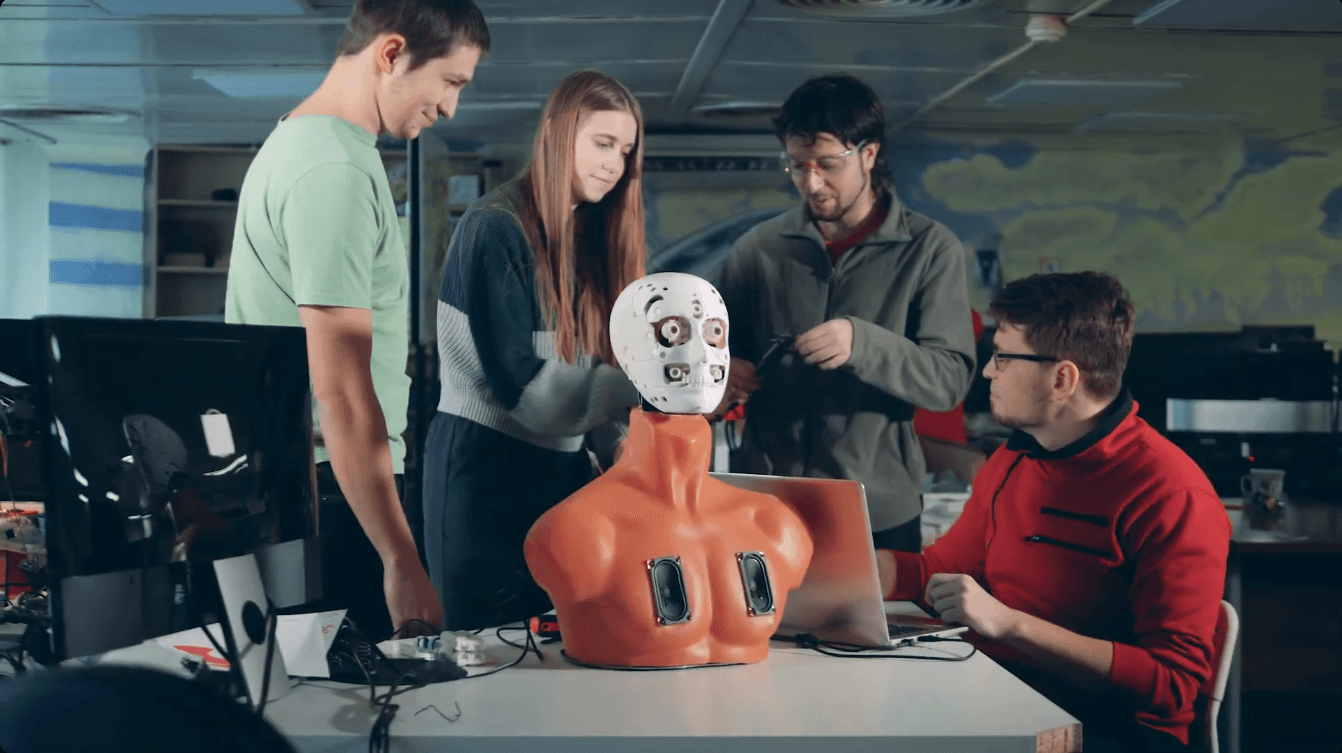
The Gentle Robots team in the workshop: four engineers at a table with an anthropomorphic robot

GentleRobots

Our history

Gentle Robots is part of the Neurobotics group of companies, specialising in anthropomorphic (human-like) robotics and the software that drives it. The company was founded in 2016 in Zelenograd; the group itself has been operating since 2004.

We build robots you want to talk to. Every appearance is recreated from a living prototype, from a photograph or from a portrait, and the moving facial expression — a silicone face powered by up to 20 actuators — lets the robot show emotions and hold a natural conversation. The robots understand speech, follow the person they talk to with their eyes and recognise their mood.

We have more than ten years of development behind us: from the first Alice of Zelenograd to mass-produced medical simulator robots. We are certain that a robot should be not only smart but also polite — which is why politeness is right there in our name.

Year the company was founded
2016
The first Alice model
2011
Actuators in the moving face
20
Years of robot development
10+

How it all began

  1. 2011

    The first Alice of Zelenograd: 9 facial actuators, microphones in the ears and a speaker in the mouth.

  2. 2012

    The robot Alex was created — with a new silicone face technology.

  3. 2013

    Alice MKII: 18 actuators in the head, 13 of them facial, and a new facial muscle called “skepticism”. The robot Oleg appeared with a moving neck.

  4. 2014

    The robot “A. S. Pushkin” was created: the likeness was recreated from paintings, a self-portrait and a death mask.

  5. 2015

    The Alan Turing robot was built for the Skolkovo Robotics Centre — with speech recognition and a chatbot.

  6. 2016

    Gentle Robots was founded. It was followed by an updated model of the “Pushkin” robot.

  7. 2018

    Alice received a body with moving arms and neck; AIRA, a robot with a projected face, and the xoRDE development environment appeared.

  8. 2019

    The robot Betsy became a doctor's assistant, and a simulator robot began teaching how to recognise the signs of a stroke.

  9. 2020

    The team was selected for the worldwide ANA Avatar XPRIZE competition.

  10. 2021

    A dental robot with a replaceable jaw was created.

Our robots

We build anthropomorphic (human-like) robots with lifelike facial expressions, speech and non-verbal communication — and we create custom appearances: from a photograph, a portrait or a living prototype. The robots run on our own RoboStudio software.

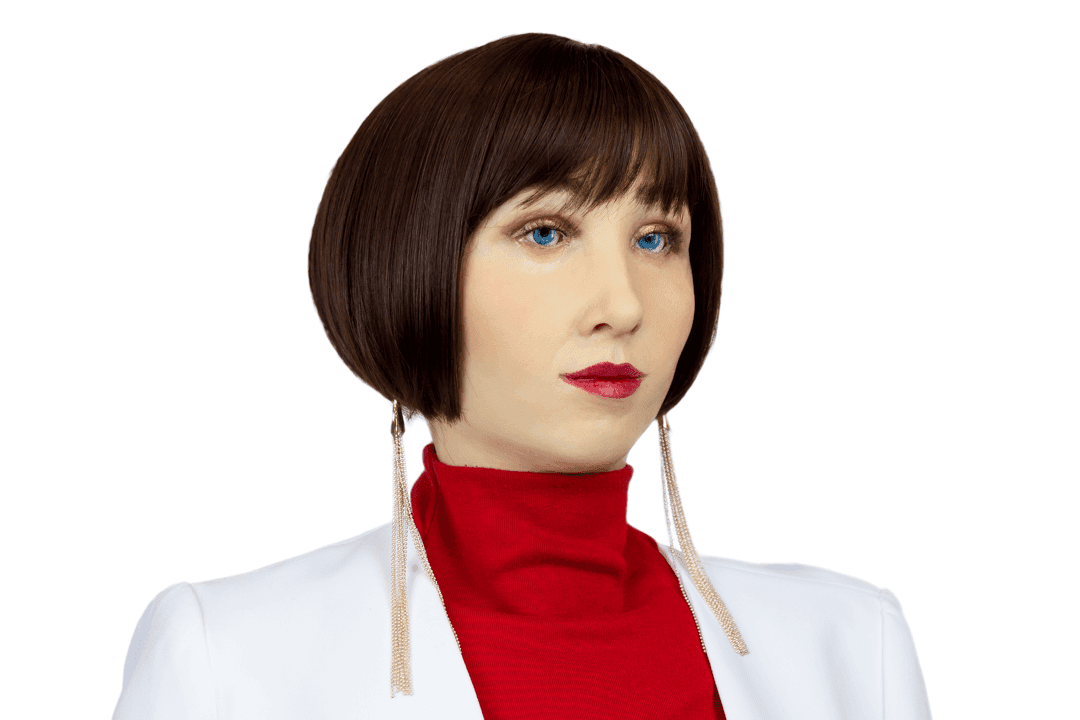
Anthropomorphic robot Alice with a silicone face

Alice

The company's first anthropomorphic robot. A silicone face with a real likeness: the appearance is either copied from a living prototype or recreated from a photograph or portrait.

  • 17 facial and positional actuators
  • Controlled through RoboStudio
  • Can work as a secretary and assistant
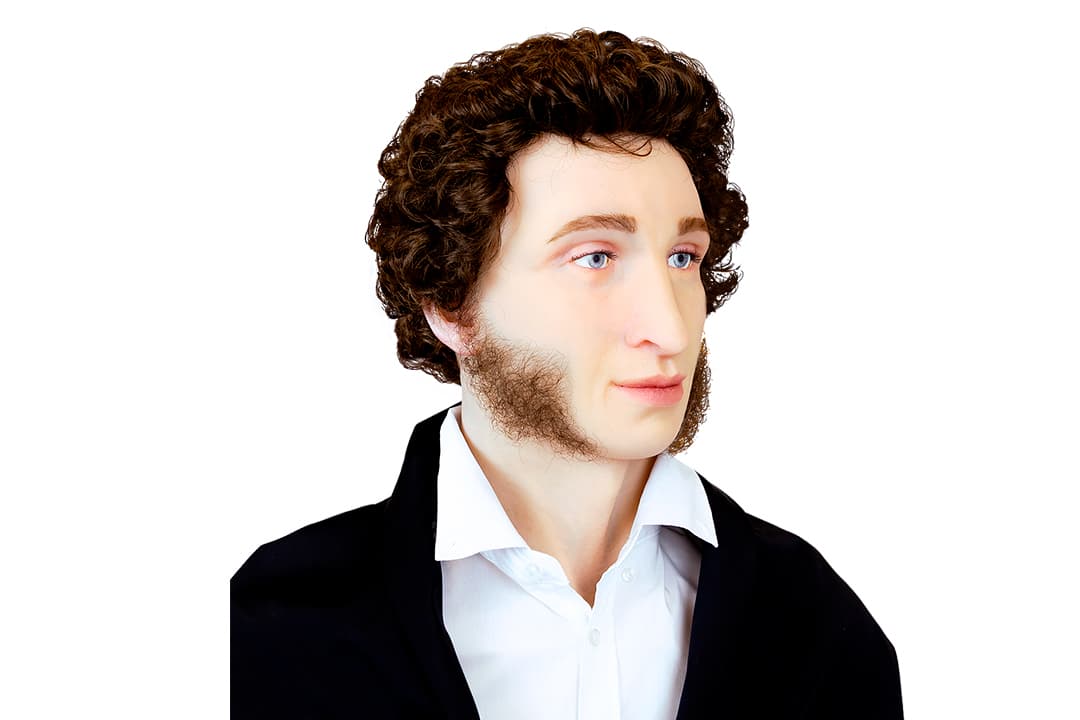
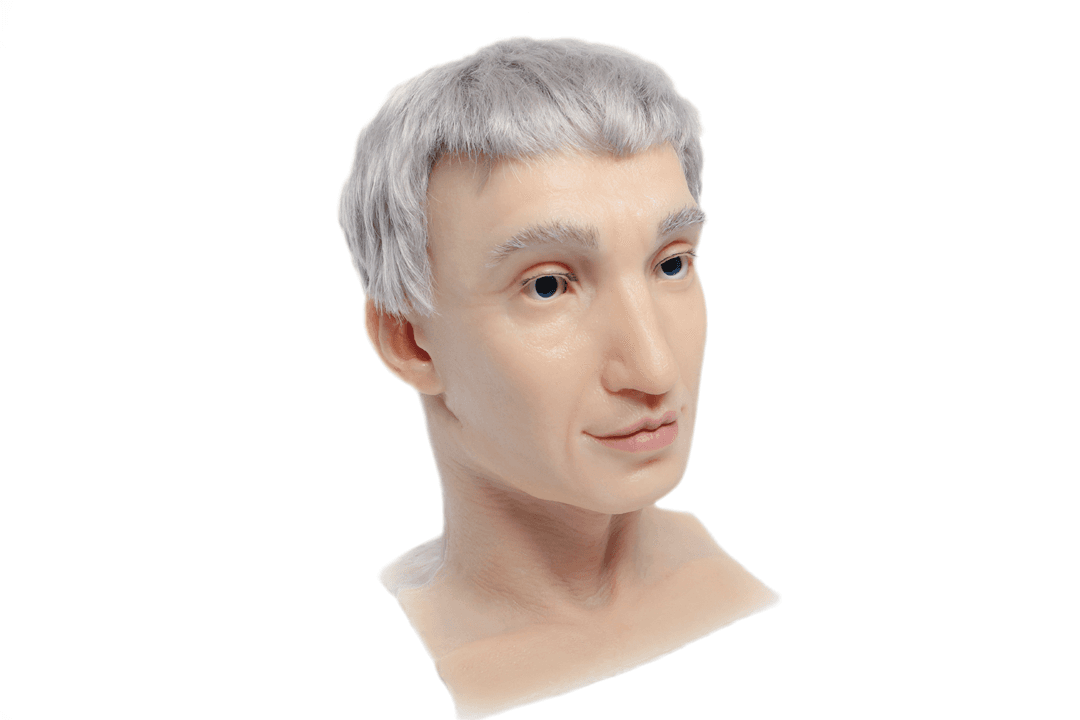
The anthropomorphic “Pushkin” robot — a copy of the poet

The “Pushkin” robot

The company's most popular robot. Alexander Sergeyevich's likeness was recreated from paintings, the memoirs of his contemporaries, a self-portrait and a death mask.

  • Recites poetry and sings romances
  • Silicone face with a real likeness
  • 17 actuators and rich facial expression
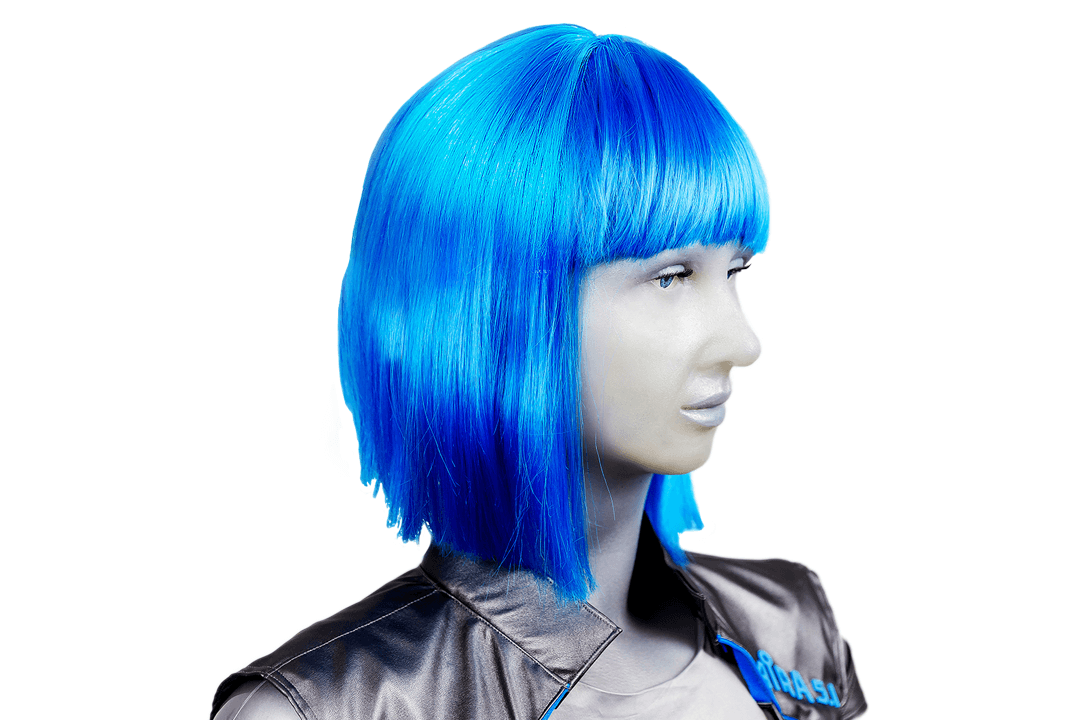
The anthropomorphic AIRA robot with a futuristic appearance

AIRA

A robot with a futuristic appearance, created in 2018. It holds a conversation and has non-verbal communication skills.

  • Recognises and copies facial emotions
  • Holds a conversation with a person
  • Gestures and eye contact
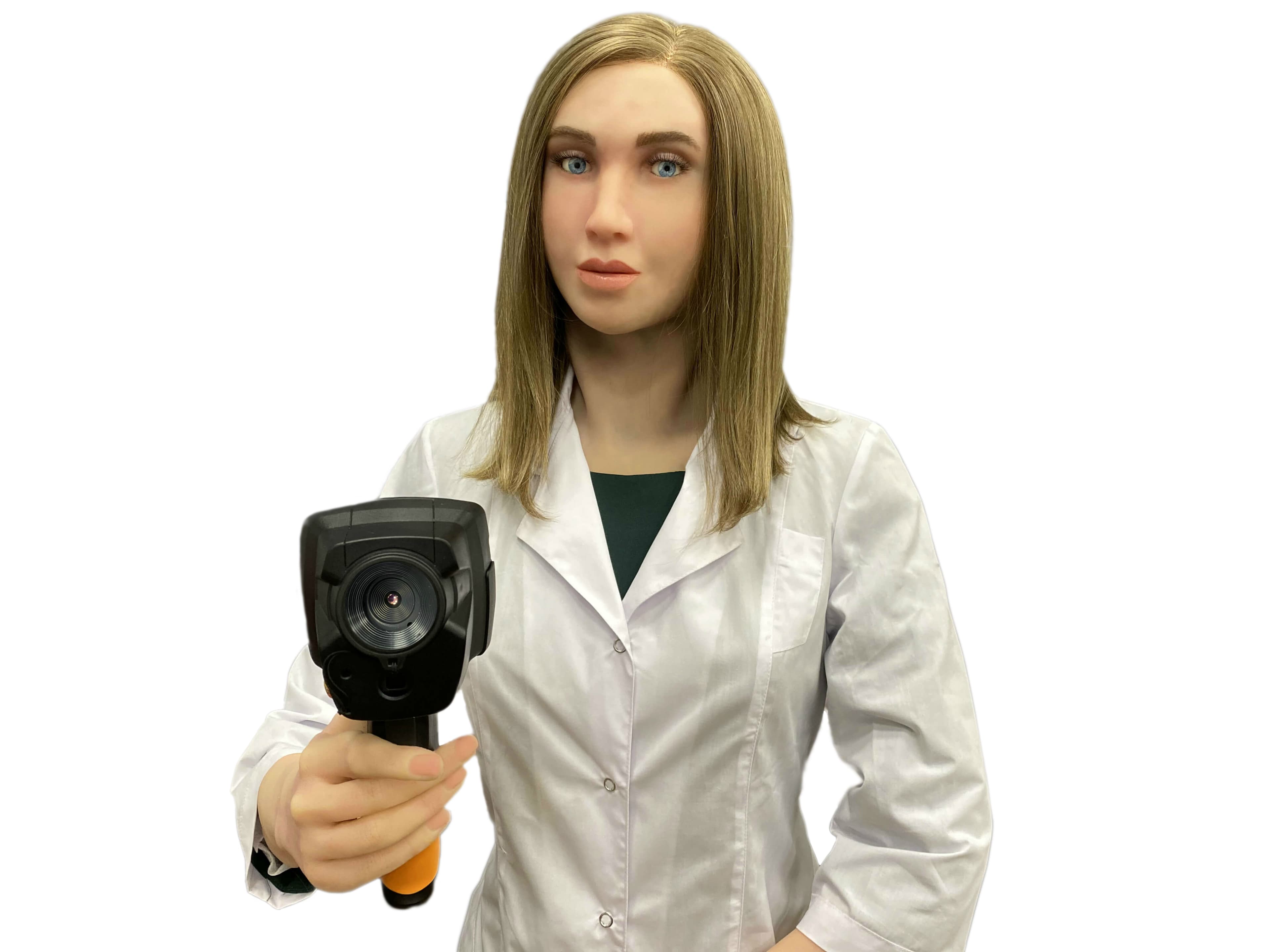
The Betsy robot — a doctor's assistant

The Betsy robot — a doctor's assistant

Developed together with the Research and Education Centre for Modern Medical Technologies. It helps with initial diagnostics and reduces the workload on medical staff.

  • Automatic temperature measurement
  • Mass diagnostics without unnecessary contact
  • Available for purchase or rent
Stroke signs simulator robot

Stroke signs simulator robot

An anthropomorphic training robot for learning to recognise the symptoms of a stroke — for medical students and schoolchildren.

  • Facial asymmetry, ptosis and strabismus
  • Tongue deviation and the proboscis reflex
  • A chatbot module for conversation
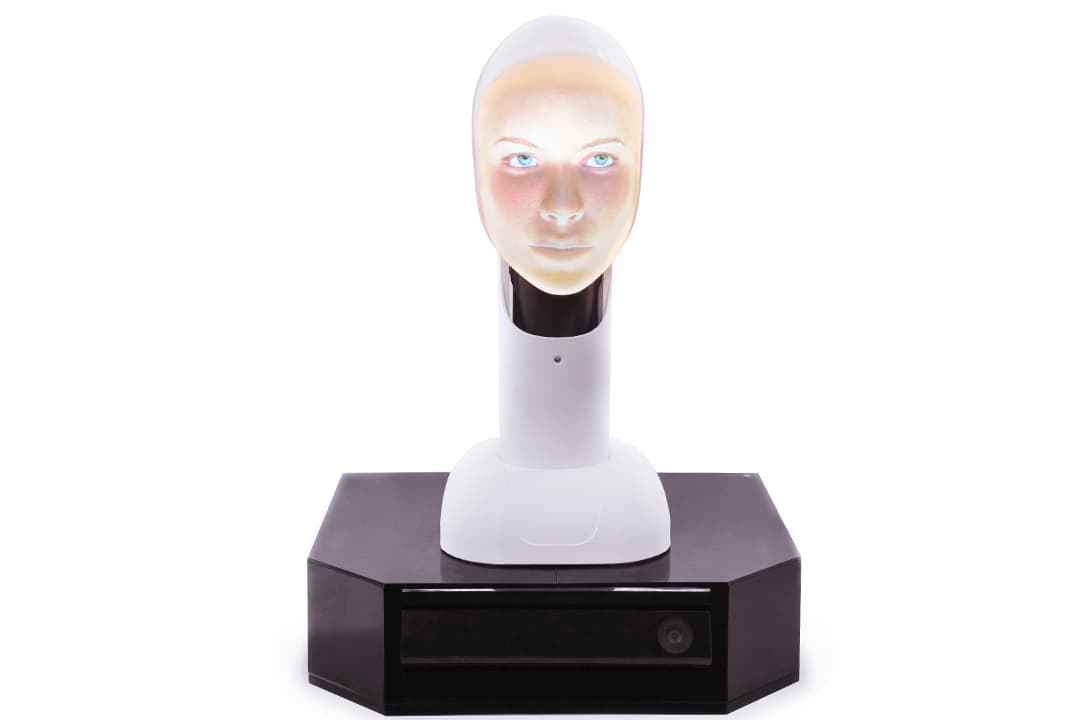
Projection robot with an animated face

Projection robot

A social robot whose face is an animated projection. It lets one device change its appearance and show unlimited facial expression.

  • Any appearance on a single device
  • Unlimited facial expression
  • Used in rehabilitation and work with children with ASD
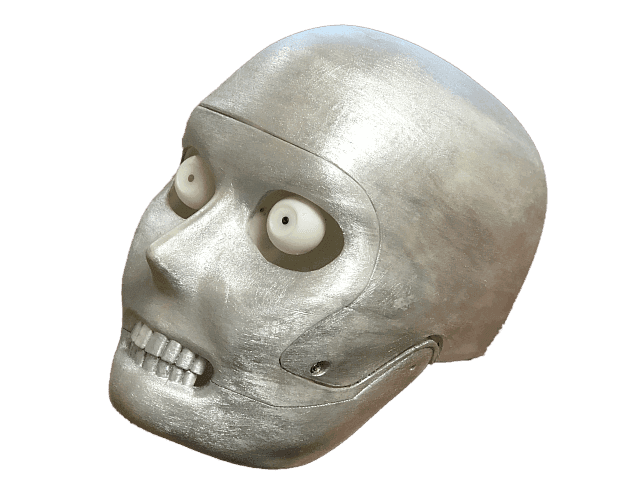
Robotic skull — an interactive exhibit

Robotic skull

An interactive exhibition and education exhibit with a set of behavioural scenarios.

  • An Arduino controller and 3 servos
  • Behaviour scenarios
  • For robotics and programming lessons
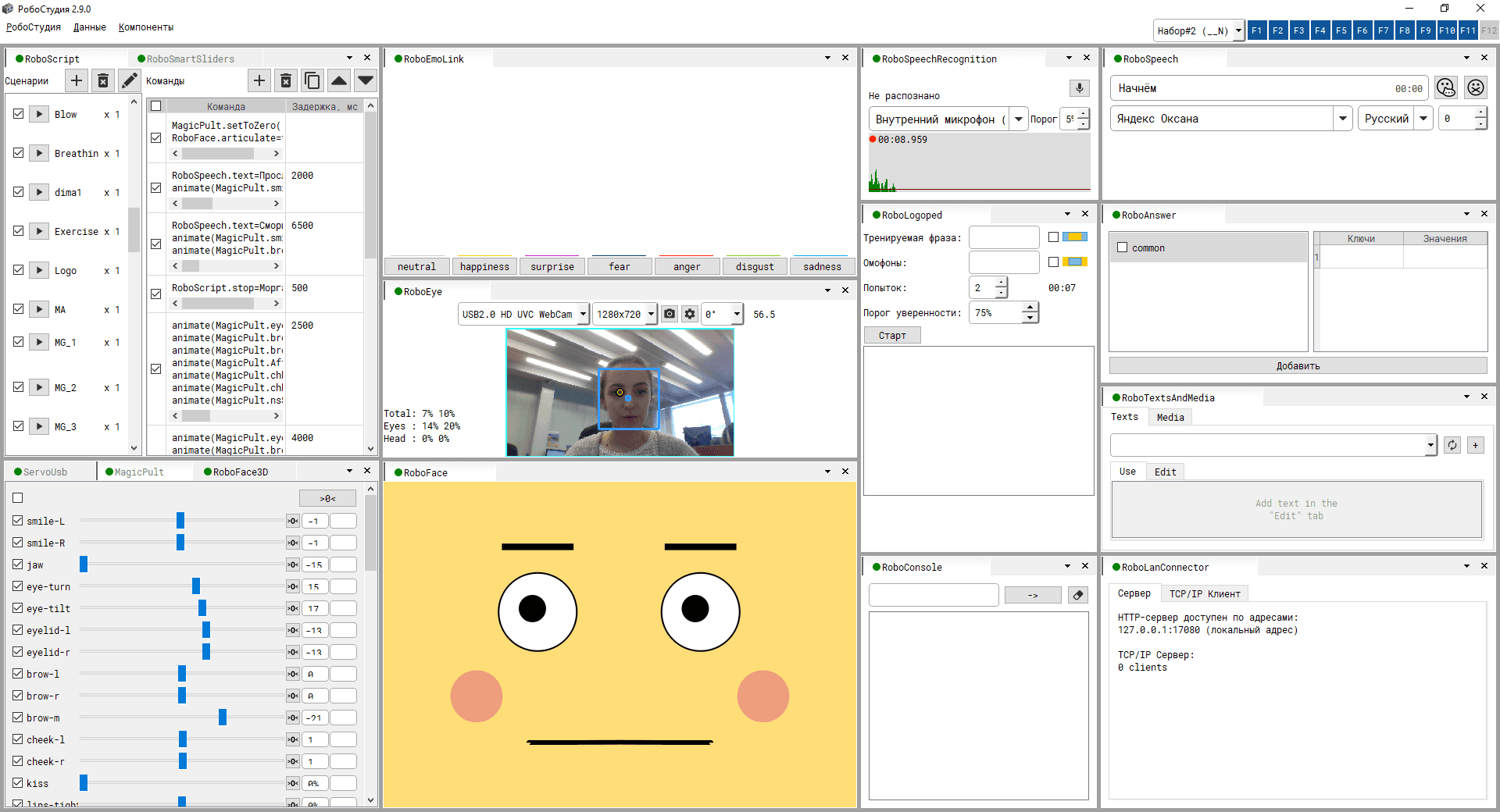
The RoboStudio interface for controlling robots

RoboStudio

Our own software for the whole robot line-up: facial expression, speech and computer vision in a single interface.

  • Facial control for silicone and projection faces
  • Speech recognition and generation with articulation
  • Chatbot and face and emotion recognition